The Green Studio: A Practical Guide to Sustainable Art Materials
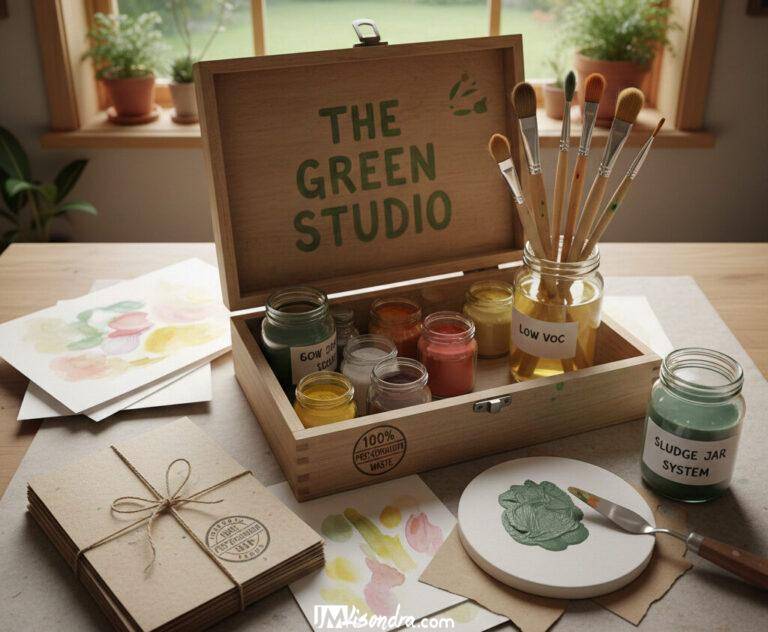
The act of creation is inherently about transformation—taking raw materials and giving them new life and meaning. But for too long, this beautiful process has come with a hidden cost: an unsustainable reliance on toxic chemicals, non-renewable resources, and excessive waste.
As an artist, you possess the vision and skill to not only create beauty but to lead by example. By adopting sustainable art materials and eco-friendly practices, you can transition your practice from one that consumes to one that respects the planet. Creating a truly Green Studio is not about compromising your artistic quality; it’s about making mindful, informed choices that enrich your life, your health, and the health of the Earth.
This practical guide is for the modern, conscious artist looking to build a more eco-friendly and sustainable creative space, one material swap and studio habit at a time.
🖌️ Part 1: Painting a Greener Picture—Non-Toxic Paints, Pigments, and Low-VOC Solvents
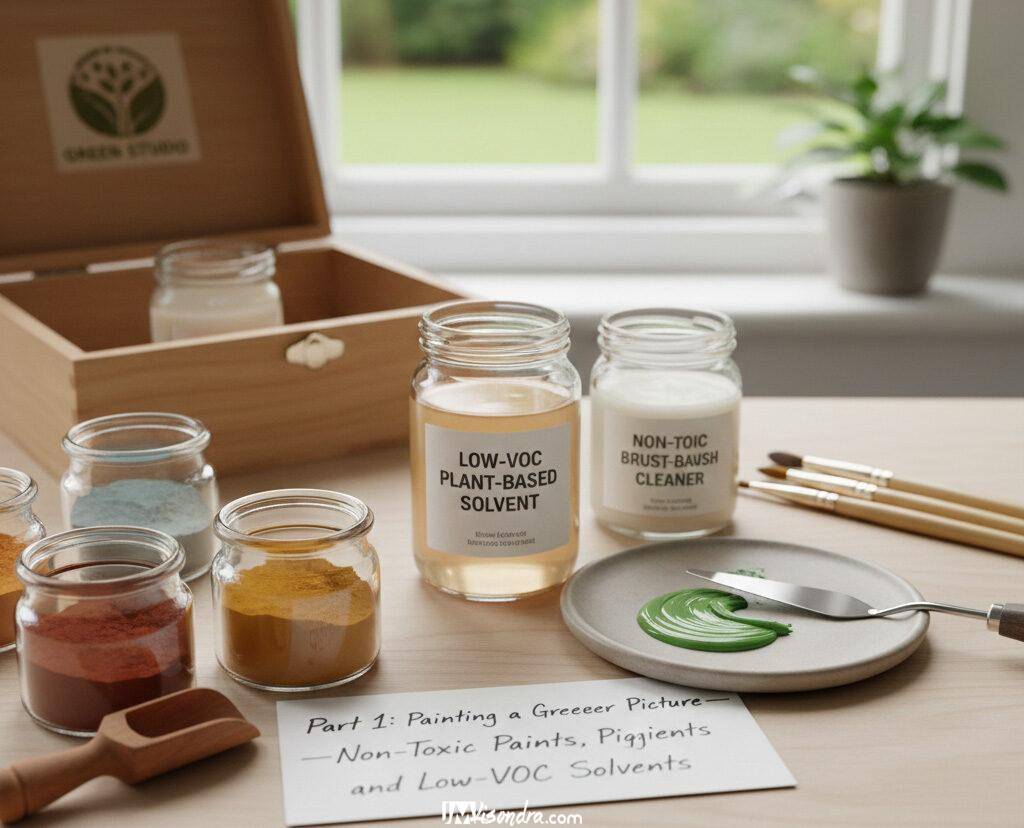
The most common environmental hazards in an artist’s studio often lurk in the tubes of color and the cans of cleaner. Moving toward sustainable painting means addressing both the pigment source and the chemical binders and solvents used for cleanup.
The Power of the Earth: Natural Pigments for Artists
Traditional pigments are derived from two primary sources: the Earth (natural) and chemical synthesis (modern). While modern synthetic pigments offer a huge, vibrant palette, many rely on heavy metals and petrochemicals.
- Go Natural with Earth Pigments: Look for ochres, umbers, and siennas. These are iron-oxide-rich clays and minerals sourced directly from the ground. They are non-toxic, have been used since prehistoric times, and provide a stunning, grounding palette of reds, yellows, browns, and blacks.
- Key Takeaway: Natural earth pigments are incredibly permanent and environmentally benign. Many suppliers offer these as raw, non-toxic powders that you can mull and mix with a simple binder (like linseed oil for oils or gum arabic for watercolors).
| Pigment Type | Environmental Impact | Recommended Swap |
| Cadmiums/Cobalts | Heavy metals, hazardous waste, high toxicity. | "Hue" versions (e.g., Cadmium Yellow Hue). |
| Natural Earth Colors | Sourced from clay/minerals, non-toxic, inert. | Ochre, Umber, Sienna powders. |
Saying Goodbye to Harsh Solvents
Turpentine and mineral spirits are necessary evils for cleaning oil brushes, but their volatile organic compounds (VOCs) are released into the air, creating both a studio health hazard and contributing to air pollution.
- The Low-VOC/Non-Toxic Switch: A simple swap makes a huge difference. Non-toxic art solvents are crucial for studio health. Look for citrus-based or plant-derived brush cleaners. These products are formulated with natural ingredients that effectively break down oil paint without releasing the harsh fumes of petroleum distillates. They are excellent low VOC paint cleaners.
- Oil and Soap Solution: Many oil painters now rely solely on alkaline brush soaps and a small amount of vegetable oil (like walnut or safflower) to clean brushes. This method is incredibly effective and completely avoids traditional solvents.
- A DIY Natural Dye Adventure: Forage for or buy simple ingredients to create your own dyes for textiles or paper (learn more about natural dyeing here):
- Yellows/Oranges: Onion skins, turmeric.
- Pinks/Reds: Avocado pits, hibiscus flowers.
📜 Part 2: Conscious Substrates—Recycled Paper and Sustainable Canvas Alternatives
The surface you work on carries its own environmental footprint, whether it's through deforestation, chemical processing, or pesticide use. Choosing conscious substrates means supporting sustainable forestry and regenerative agriculture.
Decoding Eco-Friendly Paper
Paper often comes from virgin tree pulp, but there are powerful alternatives that use agricultural waste or recycled fibers.
- The Recycled Champion: When selecting recycled paper for drawing or sketching, look for a high percentage of post-consumer waste (PCW). A 100% PCW drawing pad is a foundational piece of a green studio.
- Fiber Innovation: Explore papers made from regenerative, fast-growing fibers like bamboo or hemp. These crops require less water and fewer pesticides than traditional tree farming, offering a beautifully textured and durable alternative.
- The Cotton Rag Distinction: Many high-quality fine art papers are made from cotton linters—a by-product of the textile industry that would otherwise go to waste.
Canvas: Seeking Sustainable Alternatives
Conventional cotton and linen canvases can be heavily resource-intensive.
| Certification | What to Look For | Environmental Benefit |
| FSC | Wood stretcher bars and panels. | Guarantees wood is sourced from responsibly managed forests. |
| GOTS | Cotton or linen canvas fabric. | Ensures the fiber was grown without toxic pesticides and processed sustainably. |
A GOTS-certified canvas ensures the cotton or linen was grown without toxic pesticides and processed with eco-friendly dyes and finishes.
- For a rigid, eco-friendly surface, consider using sustainably-sourced wood panels (like birch ply) or reclaimed cabinet doors. This is an excellent sustainable canvas alternative to conventional stretched cotton.
🗑️ Part 3: Zero-Waste Art Studio Habits and Disposal
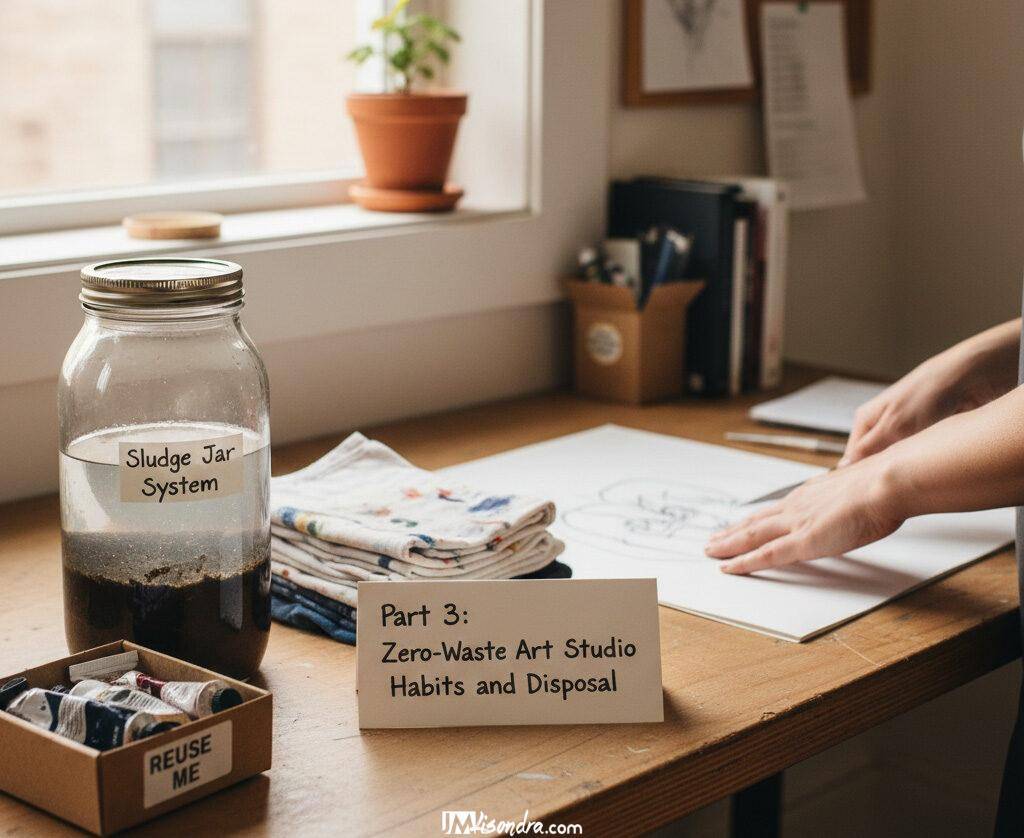
The ultimate sustainable step is to change how you manage the materials you already have. A zero-waste art studio approach prioritizes reuse, repurposing, and responsible disposal, minimizing your overall environmental impact.
Rethink, Repurpose, Reduce
- The Two-Sided Rule: Use the back of misprints or failed sketches for color testing, quick compositional studies, or warm-ups.
- Repurpose Packaging: Cardboard boxes become custom portfolios, and plastic containers turn into brush-wash reservoirs.
- Brush Swaps: Choose brushes with bamboo or reclaimed wooden handles paired with natural or synthetic fibers.
- DIY Adhesives: Instead of petroleum-based glues, make a simple wheat paste (flour and water) for collage and bookbinding.
The Critical Issue of Hazardous Waste Disposal
Some materials, particularly those used in oil painting, require specific disposal to prevent environmental contamination. Never pour solvents or paint sludge down a sink.
- The Sludge Jar System: Keep a clearly marked, sealable container for all solvent-mixed paint residue. When the sludge settles, you can pour off the clear, reusable solvent into a clean jar.
- Rags and Paper Towels: Solvent-soaked rags pose a fire risk. Always lay them flat to dry completely, ideally outdoors. This is crucial for the proper disposal of oil paint rags. Consider switching to reusable cloth rags (old t-shirts work perfectly) to minimize paper towel waste.
💚 Your Journey to a Green Studio
Creating a sustainable art practice is a journey, not a destination. Start with the simplest change—perhaps switching your solvent for a citrus cleaner or buying your next sketchbook in 100% PCW paper.
By making these mindful, practical adjustments, you align your creative mission with your environmental values. You are not just making art; you are making a difference, proving that the pursuit of beauty can, and should, be sustainable.
Do you have any questions about specific materials or disposal regulations in your area?
Do you want to learn on how to paint? You can check my FREE TUTORIALS.


About the Artist