How to Paint Horses: 5 Acrylic Painting Tutorials to Master Equine Art

Capturing the spirit, strength, and grace of a horse on canvas is a goal for many artists, yet it remains one of the most challenging subjects to master. From the glossy sheen of their coats to the complex anatomy of their muscle structure, horses require a keen eye and the right guidance. If you have been searching for 5 acrylic painting tutorials that will break down the process into manageable steps, you have arrived at the right place.
In this guide, we explore the best lessons from renowned artist JM Lisondra. Whether you are a complete beginner or an intermediate painter looking to refine your skills, these tutorials provide invaluable insights on how to paint horses in various settings—from misty forests to crashing ocean waves.
Why Acrylics are Perfect for Painting Horses
Acrylic paint is a versatile medium that is forgiving for beginners and powerful for professionals. Its fast-drying nature allows you to layer colors quickly, building up the rich textures of a horse’s mane or the subtle glazes of muscle definition without waiting days for oil paint to dry. In the tutorials below, you will see exactly how limited palettes can be mixed to create realistic earth tones, deep shadows, and vibrant highlights.
Essential Supplies You'll Need
Before diving into the tutorials, it is crucial to have the right tools. Painting detailed fur and subtle expressions requires specific brush control, especially the use of liner brushes for those fine hairs in the mane and tail.
Acrylic Paint Colors
How to paint a portrait of a horse? It starts with the right acrylic paints. You don't need a massive collection; a limited palette often creates the most cohesive color harmony. We'll need warm earth tones, white, and cool colors (blue/violet) for realistic shadow work.
- Titanium White: Essential for highlights and mixing lighter fur tones.
- Phthalo Blue / Ultramarine Blue / Primary Blue: Used for cool shadows and mixing darks.
- Brilliant Red / Primary Red / Cadmium Red: Used to mix purples/violets for shadows.
- Medium Yellow / Primary Yellow: For slight warmth in light areas.
- Raw Umber / Burnt Umber / Burnt Sienna: Primary colors for the horse's coat and shadows.
Brushes
How to paint a portrait of a horse? The secret lies in your painting brushes. The key to realistic fur is the combination of a small flat brush for blocking in color and a liner brush for detail.
- Number 12 Nylon Flat Brush (Long Handle): For backgrounds and large muscle masses.
- Number 8 Nylon Flat Brush (Long Handle): For mid-sized areas and blocking shapes.
- Number 7 Nylon Flat Brush (Short Handle): For controlled detailing.
- Number 3 Nylon Flat Brush (Short Handle): For smaller details in the face and legs.
- Number 0 Nylon Liner Brush or Round Brush (or No. 1, 00, 000 Short Handle): Essential for painting individual hairs, whiskers, and the mane.
Other Materials
- Canvas: Stretched canvas or canvas panel. Buy Canvas Here
- Easel: Holds your work steady. Buy Easel Here
- Essentials: Pencil for sketching, water cup, palette, and paper towels.
5 Acrylic Painting Tutorials That Will Teach You How to Paint Horses
Here are five hand-picked tutorials that guide you through different techniques, lighting scenarios, and compositions.
1. Acrylic Landscape Painting Tutorial: White Horse From the Forest
Duration: 2 hours 9 minutes
Artist: JM Lisondra
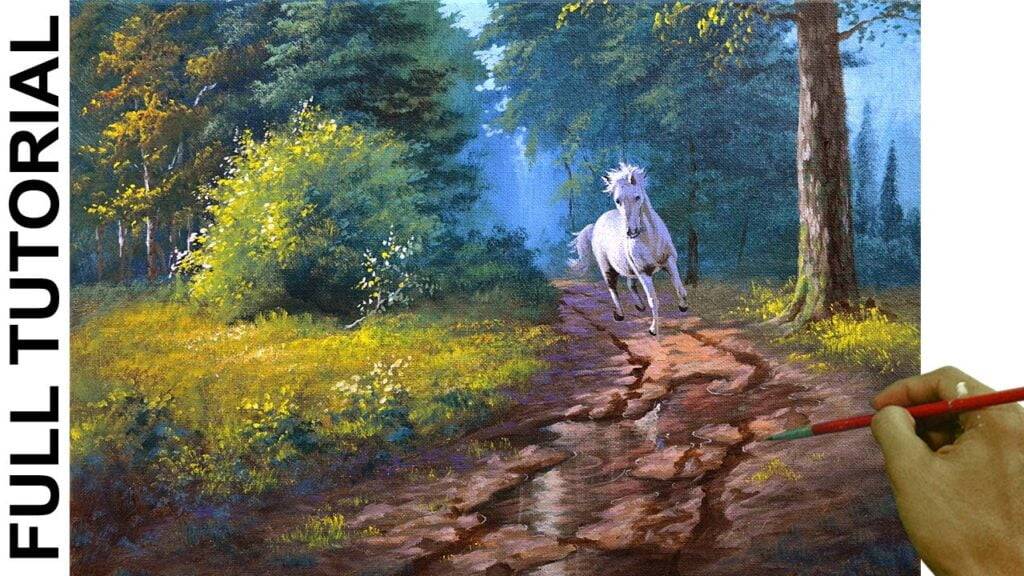
This tutorial is a masterclass in lighting and atmosphere. Painting a white subject can be notoriously difficult because "white" is rarely just pure white paint; it is a reflection of the environment. In this lesson, you will learn how to paint horses emerging from a dense forest, focusing on the interplay of shadow and light.
What you will learn:
- Lighting: How to paint a realistic white horse running from a forest with a dirt road.
- Mist and Atmosphere: Techniques for creating a misty background that adds depth.
- Anatomy in Motion: Capturing the movement of a running horse.
- Color Mixing: How to use cool blues and purples to create the shadows on a white coat, preventing the image from looking flat.
2. Acrylic Painting Lesson: Horses in the Misty Forest
Duration: 1 hour 15 minutes
Artist: JM Lisondra

If you are looking to create a moodier, more serene piece, this tutorial is ideal. It features horses in a foggy, atmospheric setting, which is perfect for learning soft edges and depth. This lesson is designed to be an easy, basic full acrylic painting tutorial suitable for beginners and advanced artists alike.
What you will learn:
- Values and Shadows: Understanding how values change as objects recede into the mist.
- Water Reflections: A key part of this lesson is learning how to paint the reflection of the horses in the river, doubling the visual impact of your subject.
- Anatomy: Basic horse anatomy tips that help ground the figures in the landscape.
- Composition: Placing multiple figures in a scene naturally.
3. Acrylic Portrait Painting Tutorial of a Brown Horse for Beginners
Duration: 1 hour 39 minutes
Artist: JM Lisondra
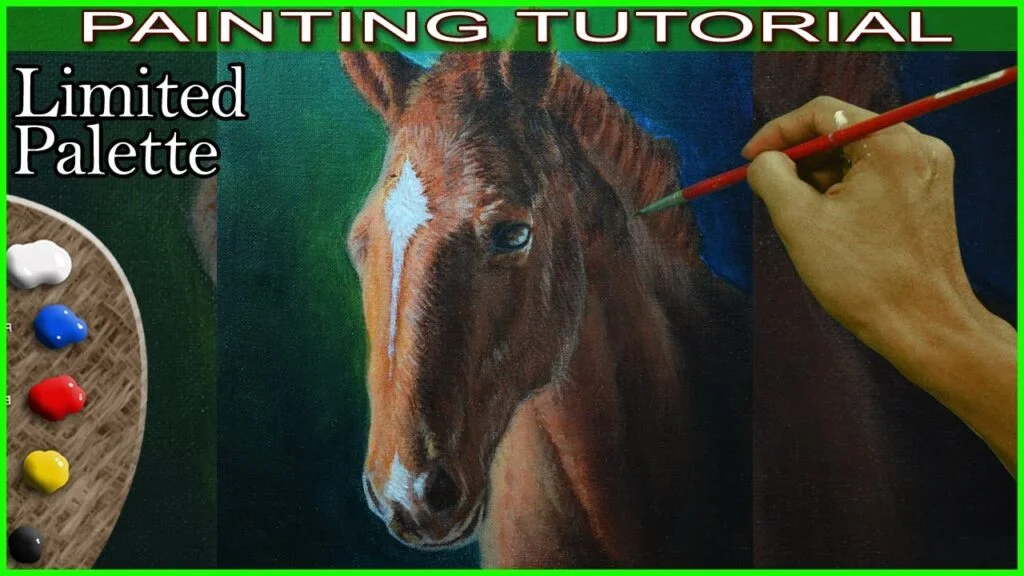
Portraiture requires a different set of skills than landscape painting. This tutorial zooms in to focus entirely on the head and neck of a brown horse. It is one of the best of the 5 acrylic painting tutorials for those who want to focus on facial details, expressive eyes, and texture without the distraction of a complex background.
What you will learn:
- Sketching to Detailing: The full process from the initial pencil sketch to the final hair details.
- Limited Palette: How to create a stunning, rich brown portrait using only 5 limited colors.
- Fur Texture: Specific brush strokes to create the look of short, velvet-like hair on the horse's face versus the longer hair of the mane.
- Facial Features: detailed instruction on painting the eyes and muzzle to give the horse life and personality.
4. How to Paint Two Horses on the Beach with Crashing Waves
Duration: 1 hour 48 minutes
Artist: JM Lisondra
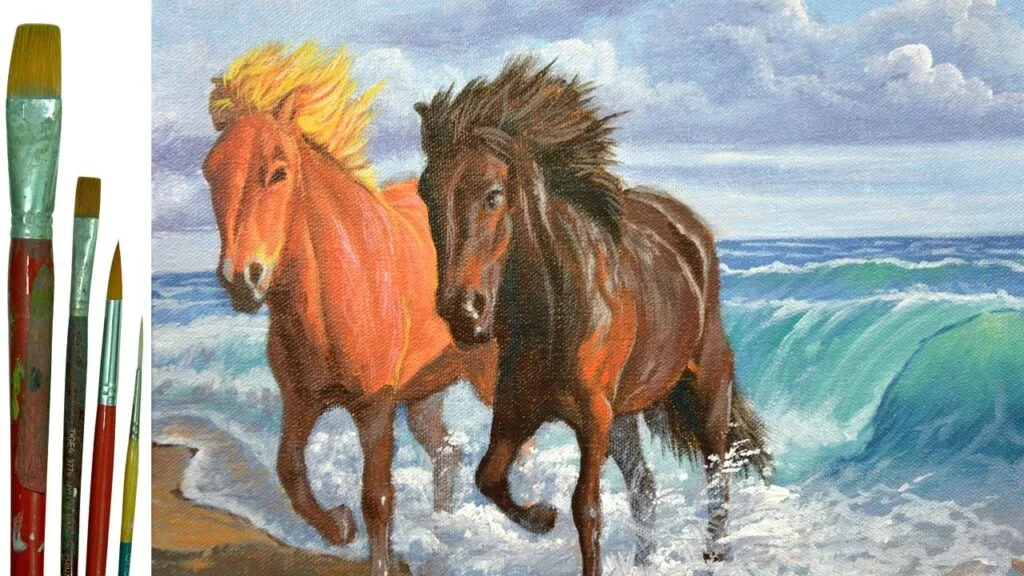
Combining the dynamic energy of animals with the fluid motion of the sea, this tutorial is an exciting challenge. It teaches you how to paint horses in a high-contrast, bright environment. The scene depicts two horses (one red/brown, one darker) running on the sand with ocean waves crashing behind them.
What you will learn:
- Dynamic Backgrounds: How to paint realistic crashing waves and sea foam.
- Warm vs. Cool: Managing the warm tones of the horses against the cool blues of the ocean.
- Action Poses: Capturing the gait of horses running on sand.
- Lighting: Creating strong sunlight effects and cast shadows on the beach.
5. Landscape Painting with a Horse (Live Tutorial)
Duration: 2 hours 19 minutes
Artist: JM Lisondra

This longer, live-recorded session offers a raw and detailed look into the artist's workflow. Unlike edited time-lapses, a live tutorial allows you to see the pacing and real-time decision-making process. This is excellent for understanding how to integrate a single animal subject into a broader landscape composition.
What you will learn:
- Real-Time Problem Solving: Watch how the artist builds the painting layer by layer without editing cuts.
- Environment Integration: How to make the horse look like it truly belongs in the landscape, rather than a sticker pasted on top.
- Advanced Layering: Techniques for building up the background, middle ground, and foreground to frame the horse perfectly.
- Patience and Pacing: Learn how to manage acrylic drying times during a longer painting session.
Start Your Equine Painting Journey Today
Learning how to paint horses does not have to be an impossible task. By following these 5 acrylic painting tutorials, you will gain the confidence to handle brushes, mix realistic colors, and capture the anatomy of these majestic creatures. Remember, the key is patience—start with the tutorial that inspires you most, gather your supplies, and enjoy the process of bringing your canvas to life.
Happy Painting!

About the Artist