
No products in the basket.
Acrylic Painting Lesson – How to Paint Tree Leaves in 21 Minutes by JMLisondra
Mastering the Illusion of Nature: A Step-by-Step Acrylic Tutorial on How to Paint Tree Leaves
Hello, aspiring artists! This is a dedicated guide drawn from the expertise of John Magne Lisondra (JMLisondra), demonstrating an approach to one of the most intriguing and challenging aspects of landscape art: how to paint tree leaves. If you’ve ever struggled with creating convincing foliage and texture, you know that tree leaves painting can be tricky. This is because achieving the proper effect or texture requires significant experience and more practice in handling the brush. But fear not—we are going to break down this process using acrylic paints, focusing specifically on achieving that crucial depth and dynamic leaf structure.
Our goal today is to show you precisely how to paint leaves on a tree using fundamental materials and a targeted application technique. We will be using water as our medium, which helps thin the acrylic paint so it’s not hard to apply onto the canvas.
Essential Materials for Tree Leaves Painting
Before we dive into the artistic application of paint, let’s ensure you have the proper tools at your paint pallet. We are using Reeves acrylic paint for this demonstration.
The Palette: The Colors You Need
To successfully paint tree foliage and structure, you will need a selection of core colors:
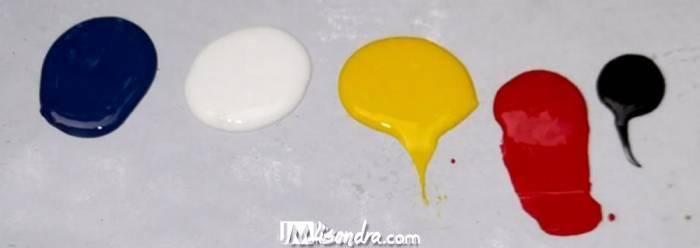
- Titanium White
- Phthalo Blue
- Medium Yellow
- Brilliant Red
- Lamp Black
- Burnt Sienna
Recommended art materials available in Amazon.
The Brushes: Precision and Texture
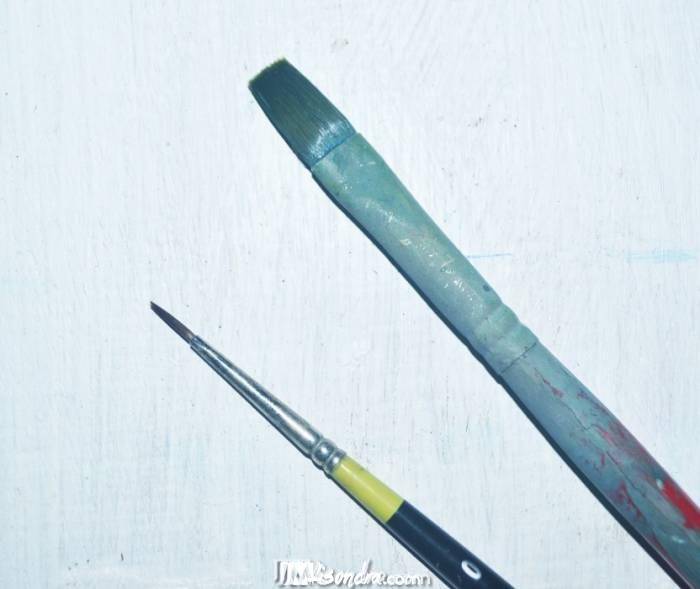
The choice of brush is critical, especially when focusing on how to paint tree leaves. We utilize two specific types of brushes for the trunk and the foliage:
- Round Pointed Brush, Number 0: This small brush is designated for details, specifically for painting the branches of the tree. It is essential because the pointed brush will create the very small, thin lines needed for the delicate structure of the branches.
- Flat Brush, Number 7: This brush is designated specifically for the leaves. A new brush can be used for the tree leaves effect.
The Medium
We use water as a medium. This simple addition is vital, as it works to thin the paint, ensuring the acrylic is wet and “flowy,” which prevents it from being hard to apply onto the canvas.
Step 1: Establishing the Tree Structure (Trunks and Branches)
To begin our journey into tree leaves painting, we must first establish the solid base upon which the foliage will sit. We start with the tree branches and trunks.
For this initial stage, combine Lamp Black and Burnt Sienna. You will use the Number 0 round pointed brush for this task. This small, pointed brush allows you to sketch the branches.
Tip on Consistency: If you find that the paint mix is hard, you must dip the brush into the water. Use just a little amount of water, enough to make the paint wet and flowy. The goal here is to carefully create the foundational lines; the pointed brush ensures these lines are small and precise, perfectly suited for detailed branches.
Step 2: Preparing the Background Foliage (The Dark Foundation)
This step is critical for successful how to paint leaves on a tree, as it establishes the necessary depth and serves as the background layer.
- Prepare the Leaf Brush: We transition now to the Number 7 flat brush, which is dedicated to the foliage. Before mixing your colors, dip the flat brush into the water to make it a little wet. Clean the brush of any excess drops.
- Mix the Dark Green: To create the foundational dark green color, you will mix blue, yellow, and red. This mixture yields the dark green needed for the background.
- Crucial Rule for Tree Leaves Painting: Remember this fundamental rule: Always start the tree leaves with the dark color or dark green. This dark layer is essential; it serves as the necessary background against which subsequent, lighter layers will provide contrast and form.
- Applying Consistency: Again, ensure your paint is flowy. If the acrylic paint feels hard on your new Number 7 flat brush, dip it into the water to make it wet and flowy.
Step 3: Mastering the Textured Leaf Effect
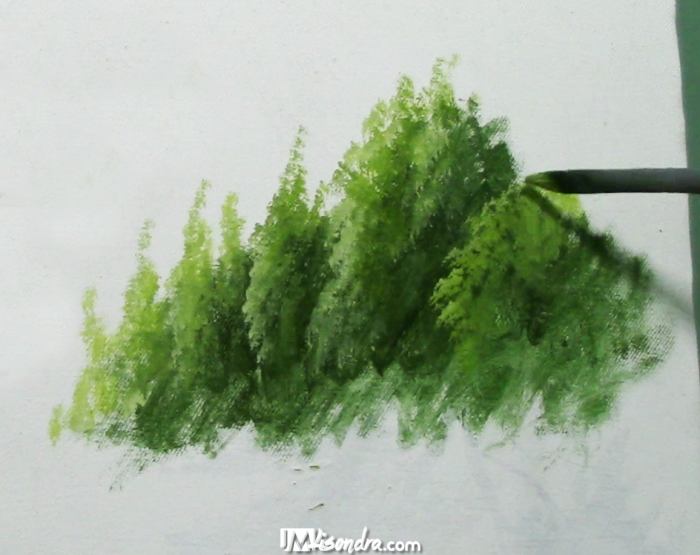
Now we come to the most important part of how to paint tree leaves: applying the texture. This is where that practice in brush handling comes into play.
Using the dark green mixture you prepared, apply the paint carefully and quickly. You must observe the action closely: the technique involves carefully and quickly creating the desired effect or texture.
The specific application technique used here involves what are referred to as dotted light strokes. Though the application must be quick, you must remain careful to capture the right effect. You are essentially applying these textured strokes to the canvas, starting from one point. Remember, you are building this texture upon the background you just created, which must always begin with that dark color.
Enhancing Your Acrylic Tree Painting Practice
Successfully learning how to paint tree leaves is a process that relies heavily on consistency and technique.
- Focus on Paint Thinning: A key insight from this approach is the consistent use of water to thin the acrylic paint. If the paint is too hard, it becomes difficult to apply effectively to the canvas. By ensuring the paint is wet and flowy, you maintain the ability to quickly and carefully apply the dotted light strokes that define the texture of the leaves.
- The Importance of the Background: Never underestimate the foundational dark layer. When you paint tree foliage, that initial layer of dark green serves a vital purpose. It provides the necessary contrast and shadow, ensuring that when you apply subsequent layers (not covered in this specific foundational lesson, but implied by the “dotted light strokes” technique), the foliage will appear dimensional rather than flat.
- Brush Handling for Texture: Practice the quick, delicate movements required for the dotted light strokes. This specific method, using the flat brush, is what ultimately creates the effect and texture that makes the tree leaves look realistic.
By focusing on these materials, understanding the necessity of starting dark, and dedicating practice to the careful yet quick application of the dotted light strokes, you can significantly enhance your ability to master tree leaves painting. Remember to keep your paint flowy using water, and always begin your leaf structure with the background dark green.
FINAL RESULTS:

I created a website focusing on FREE PAINTING TUTORIALS, you can check the link.
Do you want to check the step by step lesson of this with photos? Check here.
Do you want to learn more basic lessons on acrylic painting? You can check my level 1- acrylic painting tutorials here.



Cgazefineart says:
Wow! You are such an awesome artist. I love watching your videos.
vivian anderson says:
good work, I learned some new strokes. thanks.
Art of John Magne Lisondra says:
you’re welcome.. and thank you. :)
João Azevedo says:
Very nice! You make it “sound” easy, and the end effect is great!
Thank you for sharing.
Art of John Magne Lisondra says:
you’re welcome sir.. and thank you…
Doreen Christie says:
THANK YOU, FOR THAT TUTORIAL – ON HOW TO TREES
Art of John Magne Lisondra says:
you’re welcome… thank you for watching.. :)
doulos says:
thanks man!
Anita Wadekar says:
Wow! Thank you for the wonderful tutorials. I have never painted before and I made my first painting today with the help of your video. You are my guru. I hope to learn more from you and make some beautiful paintings. Thank you for sharing your talent.
Art of John Magne Lisondra says:
you’re welcome.. I am very glad you learn something on my video… I will be uploading more… thank you for following… :)
Karen Kelleher says:
Wow! I just finished watching! Nice video, nice voice, good teacher.
You really helped me out, a lot! thanks again.
Karen Kelleher says:
You explained just fine. You speak English quite well. How many Americans can speak your language? haha not a lot..
.I have trouble with THICK or HEAVY Indian accents and sometimes THICK (HEAVY) Asian accents, BUT I can understand you just fine! No problem. Just speak slowly and succinctly, and there’s no problem! You are doing Great at explaining! You know what you are talking about and demonstrate it at the same time WHILE BEING VIDEO TAPED! BRAVO!
Art of John Magne Lisondra says:
you’re welcome and thanks again… I am really having a hard time explaining because English is not my language… Thank you… :)
Karen Kelleher says:
Well! I have taken painting classes (4 years), and drawing classes (2 yrs) and YOU Taught me a few things I NEVER KNEW! Thank you so much!
Art of John Magne Lisondra says:
you’re welcome Maam… I am glad you get a little info of this. Though I still have lots of things to learn also… Thank you very much for taking time to watch this video.. :)
Lyw says:
I’m really enjoying watching all your videos and I’m learning a lot from you, so thank you. Can you tell me what type of palette do you use?
Art of John Magne Lisondra says:
you’re welcome and I am glad you were enjoying watching my video… I am using a paper palette and it has 20 interchangeable sheets. The brand was Maries..
Lea La Guardia says:
Thank you for sharing. I learned a lot……. Tawa ako sa unang painting ko about trees, ulaw ba….:)
Lea La Guardia says:
+John magne Lisondra (JMLisondra) thank you so much. I have retouched my painting and it looks a lot better…. the leaves…. by the way, where are you from the Philippines😉
Art of John Magne Lisondra says:
you’re welcome.. wag kang mag alala kasi di ka nag iisa.. kahit yong una kong painting ng puno ay talagang di maganda… :) so pinta lang ng pinta.. :)
Anita Holmes says:
Very helpful…thank you for sharing.
Art of John Magne Lisondra says:
you’re welcome… thanks for watching..
Fatal Fever says:
could you do a lesson on clouds please
Art of John Magne Lisondra says:
Sorry sir I don’t have fire tutorial… Maybe in the future..
Fatal Fever says:
fire too?
Art of John Magne Lisondra says:
I already have a cloud tutorial Arturo… You can check it here: https://www.youtube.com/watch?v=s4B586nKvgY
Brent says:
Thank you John … very nice
Art of John Magne Lisondra says:
you’re welcome.. thanks for watching. :)
J A says:
I Love your work! Thank you so much for sharing, It is so helpful! I attempted one of your paintings but I failed! Lol. Are you using reeves basics or heavy Body? Thanks John!
Art of John Magne Lisondra says:
You’re welcome and thank you very much! You can try it again. It really won’t be easy at first but trying will make it better… I am using mostly Reeves.. I cannot find heavy in my local art store…
Lhynn de G. says:
Very informative techniques .. for a beginner like me.. Once again thank you for sharing your awesome talent.
Art of John Magne Lisondra says:
you’re welcome Lhynn… and thanks for following… :)
Morse Code says:
Thank you for sharing your knowledge and techniques with us! You’re really great at what you do.
Art of John Magne Lisondra says:
you’re welcome and thank you for following..
Aregai sileman says:
great job
Elena Guerrini says:
thank you so much to share
Joyce Simpson says:
Very helpful. Thanks.
definitelynotawitch says:
Awesome! Thanks!
Art of John Magne Lisondra says:
you’re welcome and thank you.