
No products in the basket.
Acrylic Painting Lesson – How to Paint Tree Leaves in 21 Minutes by JMLisondra
Mastering the Illusion of Nature: A Step-by-Step Acrylic Tutorial on How to Paint Tree Leaves
Hello, aspiring artists! This is a dedicated guide drawn from the expertise of John Magne Lisondra (JMLisondra), demonstrating an approach to one of the most intriguing and challenging aspects of landscape art: how to paint tree leaves. If you’ve ever struggled with creating convincing foliage and texture, you know that tree leaves painting can be tricky. This is because achieving the proper effect or texture requires significant experience and more practice in handling the brush. But fear not—we are going to break down this process using acrylic paints, focusing specifically on achieving that crucial depth and dynamic leaf structure.
Our goal today is to show you precisely how to paint leaves on a tree using fundamental materials and a targeted application technique. We will be using water as our medium, which helps thin the acrylic paint so it’s not hard to apply onto the canvas.
Essential Materials for Tree Leaves Painting
Before we dive into the artistic application of paint, let’s ensure you have the proper tools at your paint pallet. We are using Reeves acrylic paint for this demonstration.
The Palette: The Colors You Need
To successfully paint tree foliage and structure, you will need a selection of core colors:
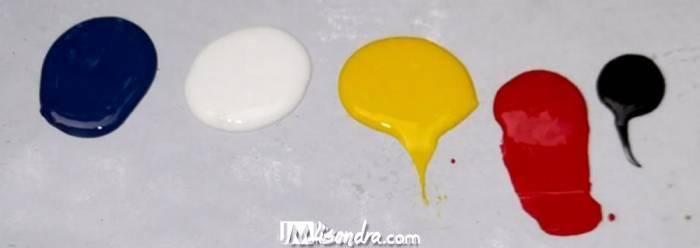
- Titanium White
- Phthalo Blue
- Medium Yellow
- Brilliant Red
- Lamp Black
- Burnt Sienna
Recommended art materials available in Amazon.
The Brushes: Precision and Texture
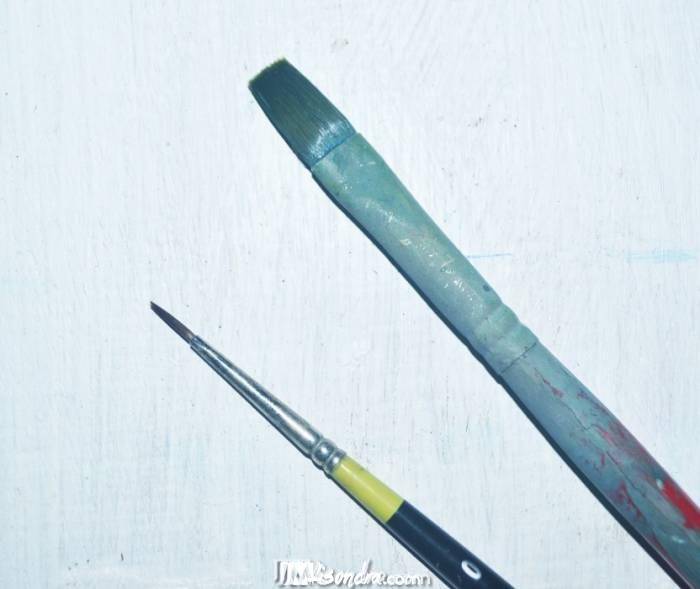
The choice of brush is critical, especially when focusing on how to paint tree leaves. We utilize two specific types of brushes for the trunk and the foliage:
- Round Pointed Brush, Number 0: This small brush is designated for details, specifically for painting the branches of the tree. It is essential because the pointed brush will create the very small, thin lines needed for the delicate structure of the branches.
- Flat Brush, Number 7: This brush is designated specifically for the leaves. A new brush can be used for the tree leaves effect.
The Medium
We use water as a medium. This simple addition is vital, as it works to thin the paint, ensuring the acrylic is wet and “flowy,” which prevents it from being hard to apply onto the canvas.
Step 1: Establishing the Tree Structure (Trunks and Branches)
To begin our journey into tree leaves painting, we must first establish the solid base upon which the foliage will sit. We start with the tree branches and trunks.
For this initial stage, combine Lamp Black and Burnt Sienna. You will use the Number 0 round pointed brush for this task. This small, pointed brush allows you to sketch the branches.
Tip on Consistency: If you find that the paint mix is hard, you must dip the brush into the water. Use just a little amount of water, enough to make the paint wet and flowy. The goal here is to carefully create the foundational lines; the pointed brush ensures these lines are small and precise, perfectly suited for detailed branches.
Step 2: Preparing the Background Foliage (The Dark Foundation)
This step is critical for successful how to paint leaves on a tree, as it establishes the necessary depth and serves as the background layer.
- Prepare the Leaf Brush: We transition now to the Number 7 flat brush, which is dedicated to the foliage. Before mixing your colors, dip the flat brush into the water to make it a little wet. Clean the brush of any excess drops.
- Mix the Dark Green: To create the foundational dark green color, you will mix blue, yellow, and red. This mixture yields the dark green needed for the background.
- Crucial Rule for Tree Leaves Painting: Remember this fundamental rule: Always start the tree leaves with the dark color or dark green. This dark layer is essential; it serves as the necessary background against which subsequent, lighter layers will provide contrast and form.
- Applying Consistency: Again, ensure your paint is flowy. If the acrylic paint feels hard on your new Number 7 flat brush, dip it into the water to make it wet and flowy.
Step 3: Mastering the Textured Leaf Effect
Now we come to the most important part of how to paint tree leaves: applying the texture. This is where that practice in brush handling comes into play.
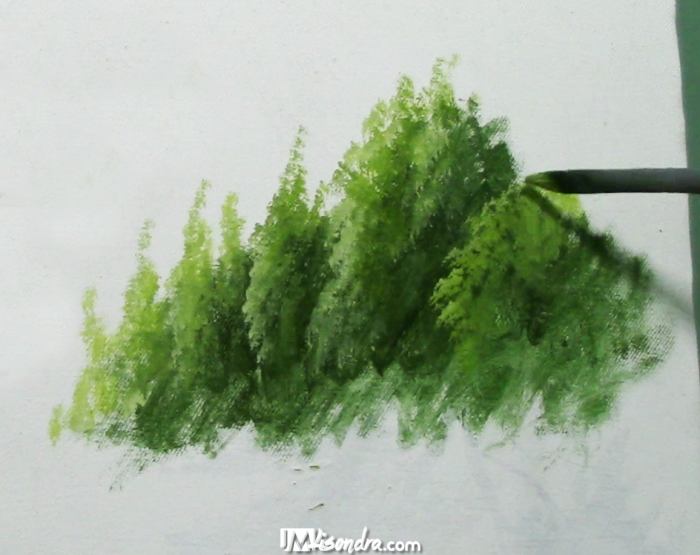
Using the dark green mixture you prepared, apply the paint carefully and quickly. You must observe the action closely: the technique involves carefully and quickly creating the desired effect or texture.
The specific application technique used here involves what are referred to as dotted light strokes. Though the application must be quick, you must remain careful to capture the right effect. You are essentially applying these textured strokes to the canvas, starting from one point. Remember, you are building this texture upon the background you just created, which must always begin with that dark color.
Enhancing Your Acrylic Tree Painting Practice
Successfully learning how to paint tree leaves is a process that relies heavily on consistency and technique.
- Focus on Paint Thinning: A key insight from this approach is the consistent use of water to thin the acrylic paint. If the paint is too hard, it becomes difficult to apply effectively to the canvas. By ensuring the paint is wet and flowy, you maintain the ability to quickly and carefully apply the dotted light strokes that define the texture of the leaves.
- The Importance of the Background: Never underestimate the foundational dark layer. When you paint tree foliage, that initial layer of dark green serves a vital purpose. It provides the necessary contrast and shadow, ensuring that when you apply subsequent layers (not covered in this specific foundational lesson, but implied by the “dotted light strokes” technique), the foliage will appear dimensional rather than flat.
- Brush Handling for Texture: Practice the quick, delicate movements required for the dotted light strokes. This specific method, using the flat brush, is what ultimately creates the effect and texture that makes the tree leaves look realistic.
By focusing on these materials, understanding the necessity of starting dark, and dedicating practice to the careful yet quick application of the dotted light strokes, you can significantly enhance your ability to master tree leaves painting. Remember to keep your paint flowy using water, and always begin your leaf structure with the background dark green.
FINAL RESULTS:

I created a website focusing on FREE PAINTING TUTORIALS, you can check the link.
Do you want to check the step by step lesson of this with photos? Check here.
Do you want to learn more basic lessons on acrylic painting? You can check my level 1- acrylic painting tutorials here.



Neusa says:
Amo seus videos sua arte.
HILTOM CAETANO CAETANO says:
Linda e prática aula sobre árvores! Obrigado!
Art of John Magne Lisondra says:
Você é senhor bem-vindo e obrigado por assistir … :)
Kanwal Shahid says:
you are a great teacher
Art of John Magne Lisondra says:
thank you Kanwal
Nill Rock says:
great…..
Art of John Magne Lisondra says:
thank you Nill..
Marcus-Marie Moylan says:
AMAZING LESSON!
Marcus-Marie Moylan says:
ANYTIME!
Malou Haynes says:
Nice one, John. It’s a good tutorial for beginners.
Art of John Magne Lisondra says:
thank you Malou… :)
Games hacks says:
Excelent information in this painting i got lots of knowledges from here thanks a lot…..
Games hacks says:
welcome to u too
Art of John Magne Lisondra says:
you’re welcome Nabin… thank you for watching… :)
Abdullahi Kuul says:
Wow amazing as always……U made it look so simple….. Thank u soo much for the contribution… We ever so grateful
Art of John Magne Lisondra says:
you’re welcome sir… and thank you for always following my videos…
Udo Helmts says:
it is very helpfull,good job :-)
Art of John Magne Lisondra says:
thank you so much Udo… :)
Ria22849 says:
Das ist sehr nett von Dir, vielen Dank. Liebe Grüße aus Germany
Art of John Magne Lisondra says:
Sie sind willkommen Ria .. und vielen Dank ! :)
Елена Морозова says:
Всегда с восторгом наблюдаю за вашим искусством. Спасибо! Почаще радуйте нас своим творчеством.
Art of John Magne Lisondra says:
вы Добро пожаловать и спасибо так много!
Nicoleta Guetter says:
I am Happy you teach people to paint 😊
Art of John Magne Lisondra says:
you’re welcome Joy.. Thanks for suggesting.. Yes! I will! That would be short and a little easier…
Joy Pittura says:
John magne Lisondra thanks John..your very talented..and great teaching. Tfs and posting these vids. Can you please do a detailed lesson on how to paint rocks? Thanks so much if you have time…
Art of John Magne Lisondra says:
thank you so much.. I am happy too… :)
Aryan D says:
brush no 6 or 7 ? As it’s written 6 and you r saying 7. pls clear. Thanks.
Aryan D says:
+John magne Lisondra (JMLisondra) , thanks.
Art of John Magne Lisondra says:
Ah yes! Sorry about that… It’s just typo error.. It’s number 7, and it’s a new brush. Before I was using no 6 that’s why it always comes to my mind… Anyway no 6 and 7 has a little difference in size so you can use either 6 or 7…
Owen Barnhart says:
As others has said , very helpful. Nice to see different brush strokes and colors. Thanks !
Ed Will says:
Excellent information
Art of John Magne Lisondra says:
thank you E Will..
DaydreaminArtbyDeb says:
Great! I will and thanks!
DaydreaminArtbyDeb says:
Very helpful! Thank you. I’d like to paint a waterfall. Could you show how to do that on a future video?
Art of John Magne Lisondra says:
you’re welcome…. I already have a waterfall painting video… Just check it on my channel… thank you…
Olga Roberts- van Veenendaal says:
thank you very much, very interesting and useful lesson.
Art of John Magne Lisondra says:
you’re welcome… thank you so much!
Priyanka Jha says:
Very helpful tutorial!
Robert Dunn says:
Thank you for posting this tutorial on painting leaves. I have attempted trees but they look like i used my big toe to create the leaves. LOL I will use less pressure applying the paint. Starting with a darker green graduating to a lighter more yellow highlight. and not over do.
Art of John Magne Lisondra says:
you’re welcome Robert… and thank you so much! I am glad you learn something from this…